

核心要点
- Financial independence arrives when money you have set aside can cover your living costs, so it depends on spending and savings as much as on salary.
- Your savings rate, the share of income you keep, is the engine; raising it shortens the road from both ends at once.
- Build a cash buffer and basic insurance before investing, so one bad month never forces you into debt or into selling at a loss.
- Clear expensive debt early, because interest charged at high rates grows against you faster than most investments can grow for you.
- Invest steadily for the long term in broad, low-cost, diversified holdings, and ignore hot tips, daily prices and other people's lifestyles.
本篇内容
- Independence is about coverage, not income
Financial independence means the money you have built up, and the income it produces, can pay for the life you want without a pay cheque. Work becomes a choice rather than a requirement.
- The gap between earning and spending
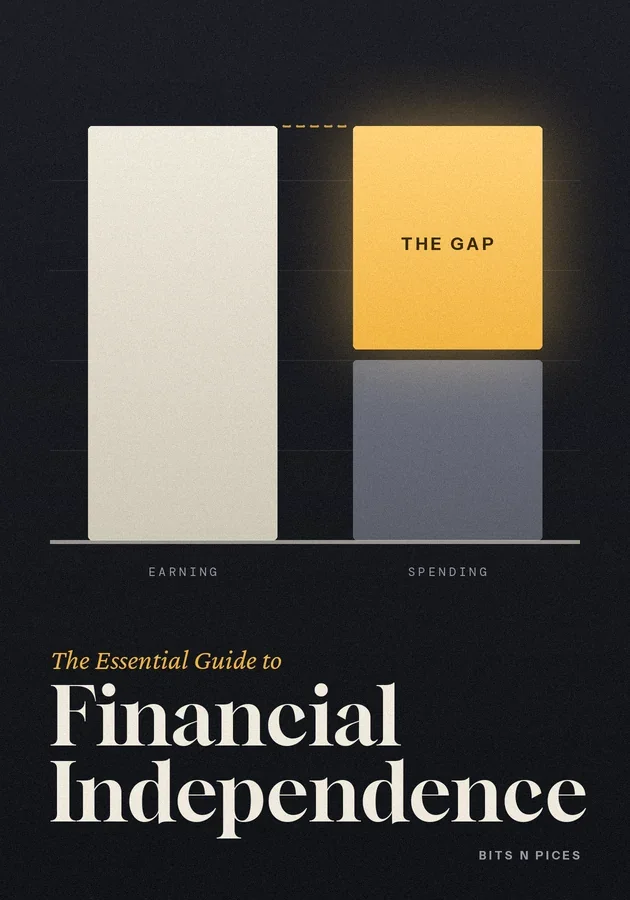
The most powerful figure in personal finance is your savings rate: the share of your take-home income that you keep rather than spend. It matters more than salary because it works on both sides at once.
- A buffer that protects everything else
Before money can grow, it needs protecting. An emergency fund is cash held somewhere safe and easy to reach, kept only for genuine surprises such as a job loss or a broken scooter.
- Debt: the current running against you
Interest is the price of borrowing, usually shown as a yearly percentage. Saving puts that maths on your side; borrowing turns it against you, and on credit cards and many personal loans the rate is far higher than most investments reliably earn.
- Growth: time, spreading and low costs
Savings alone rarely reach independence, because inflation, the slow rise in prices, quietly shrinks what cash can buy. Investing puts money into things that can grow, such as shares in businesses or bonds that pay interest, accepting ups and downs in exchange for higher expected growth over long periods.
- Your number, your priorities, and what to ignore
Your independence number is an estimate of how much invested money could cover your yearly costs. A widely used rule of thumb multiplies annual spending by about twenty-five, which assumes you withdraw around four per cent a year.
六种学习方式
为本书专门编写了可视化、思维导图、练习、场景、挑战和复习模式。
测验与抽认卡
测试你的阅读成果,并通过间隔重复巩固记忆。
Bits AI
它可以根据你正在看的书籍、章节或测验题来回答。





