

核心要点
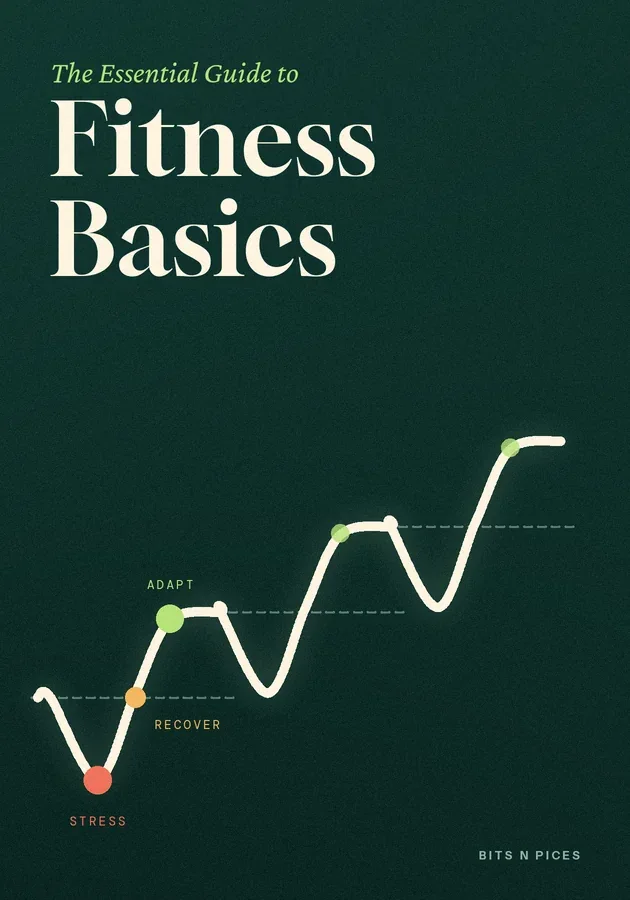
- Every fitness gain runs on one engine: a training stress, enough recovery to repair it, and adaptation that makes the same stress easier next time.
- You adapt to exactly what you practise, so match training to the quality you want and space hard strength and hard cardio apart.
- Volume, intensity and frequency trade against each other; raise one dial at a time, in modest steps, while holding the others steady.
- Sleep, food and life stress draw on the same recovery budget as training, so plan lighter weeks when the rest of life gets heavy.
- Prioritise consistency, overload, technique and sleep before programme details, and judge progress on multi-week trends rather than single sessions or scale readings.
本篇内容
- The engine: stress, recovery, adaptation
Every idea in this guide hangs on one mechanism. Training is a stress that temporarily disturbs the body; recovery repairs the disturbance; adaptation leaves you slightly more capable than before, so the same stress feels easier next time.
- Specificity: the body adapts to what it does
Adaptation is specific. Long easy efforts build the heart's pumping capacity and the muscles' ability to use oxygen; heavy, slower efforts build strength; fast, explosive efforts build power; moving through full range builds mobility; and practising unsteady positions builds balance.
- Dose: volume, intensity and frequency
Dose describes how much stress a session and a week deliver, and it has three dials. Volume is the total amount of work, such as minutes run or sets completed.
- Recovery is a whole-life budget
Recovery is where adaptation actually happens, and it draws on more than rest days. Sleep is the most powerful input: short or broken nights slow repair and make hard sessions feel harder.
- What to prioritise and what to ignore
Most confusion in fitness comes from treating small details as big ones. A useful priority stack runs from the base upwards.
- Measurement, plateaus and when to escalate
Good measurement separates signal from noise. Body weight can swing by a kilogram or more from one day to the next with water and food, so single readings mislead; weekly averages and performance markers tell the truth.
六种学习方式
为本书专门编写了可视化、思维导图、练习、场景、挑战和复习模式。
测验与抽认卡
测试你的阅读成果,并通过间隔重复巩固记忆。
Bits AI
它可以根据你正在看的书籍、章节或测验题来回答。





