核心要点
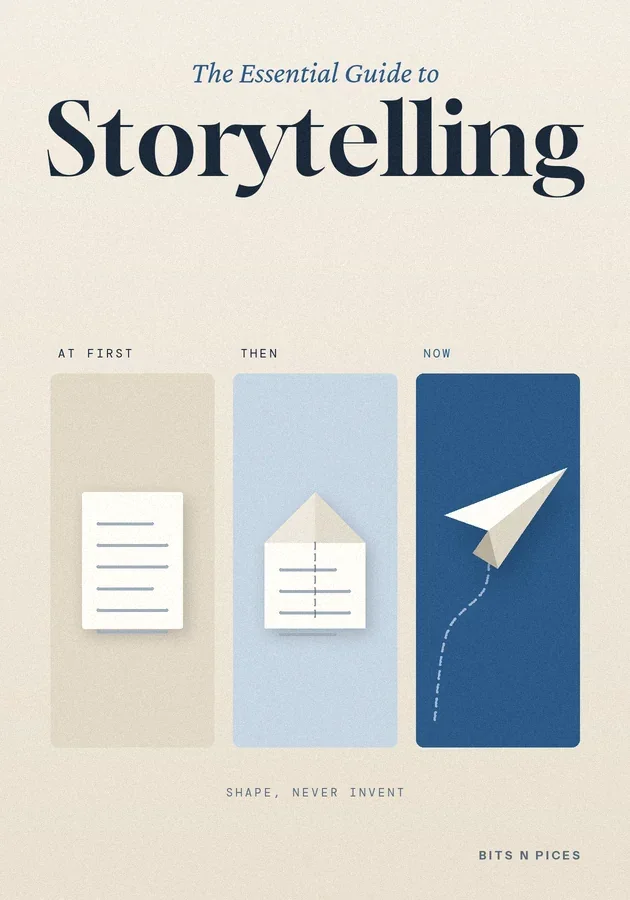
- A story needs a change the listener can feel, so test every draft with at first, then, and now before you tell it.
- Write your point as one sentence before you speak, then keep only the moments and details that serve that sentence.
- Open inside a specific moment, build tension with one obstacle, let the turn happen and land on what the change meant.
- Spend your strongest concrete detail at the turn, and let the listener decide the length, the background and the rest of the detail.
- Shape freely but never invent: choose the start, compress time and cut dull parts, yet keep every fact, number and quote true.
本篇内容
- What a story is, and what it is not
A story is an account of someone who wants something, meets a difficulty and ends up changed. That last part matters most.
- Idea one: change is the engine
If nothing changes, you have described a situation, not told a story. The change can be large, such as a job lost or a city left, or tiny, such as a mind changed about a neighbour.
- Idea two: know your point before you start
The point is the one idea you want the listener to carry away. Tellers who skip it wander, because without a destination every detail seems worth including.
- Idea three: the shape that holds attention
Most short stories that work share a four-part shape. The opening drops the listener into a specific moment rather than into background.
- Ideas four and five: detail and the listener
A single concrete detail does more than a string of adjectives. Saying the office was chaotic gives the listener your opinion; saying three phones rang while the printer chewed the only copy of the contract lets them see it and reach the opinion themselves.
- Idea six, the trade-offs and what to ignore
The sixth idea is trust. You may shape a story: choose where it starts, compress three weeks into a sentence, leave out the dull stretches.
六种学习方式
为本书专门编写了可视化、思维导图、练习、场景、挑战和复习模式。
测验与抽认卡
测试你的阅读成果,并通过间隔重复巩固记忆。
Bits AI
它可以根据你正在看的书籍、章节或测验题来回答。