核心要点
- Investors as a group earn the market return minus costs, so costs decide who wins
- Own the whole market through a broad, low-cost index fund instead of hunting for winners
- Most active funds trail the index over long periods and the winners rarely repeat
- Focus on business returns from earnings and dividends; ignore swings in market mood
- Keep it simple: pick an equity and bond split, rebalance rarely, and hold for decades
本篇内容
- Own everything, pay almost nothing
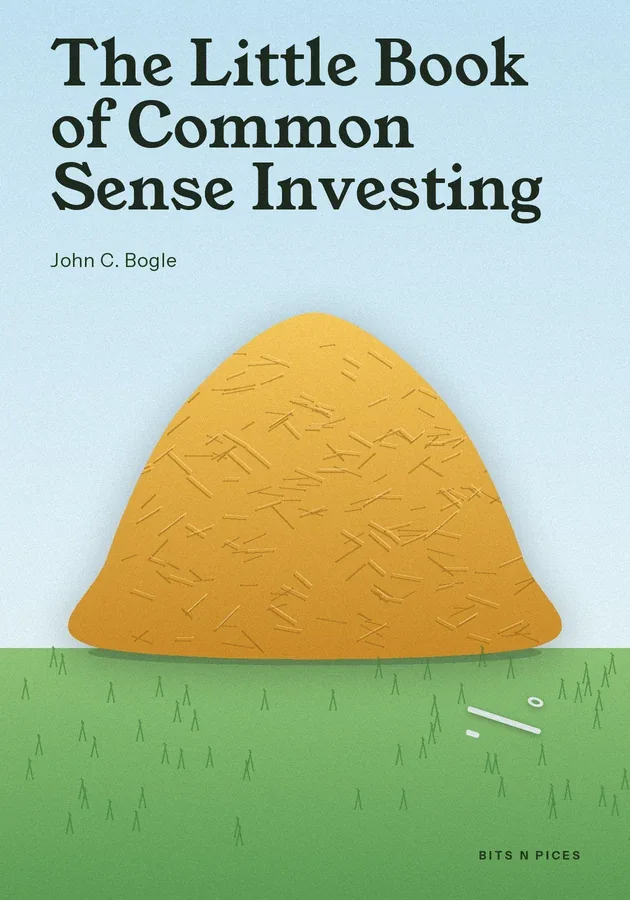
John C. Bogle founded Vanguard and launched the first index fund for ordinary investors in 1976, and this little book is his case in plain language.
- The relentless arithmetic of costs
Bogle's foundation is a piece of arithmetic no marketing can escape. Before costs, the average rupee invested in the market earns exactly the market return, because the market is the sum of all its investors.
- Buy the whole haystack
Rather than searching for the few stocks or fund managers that will beat the market, Bogle says to own all of them through a broad, low-cost index fund. His evidence is that most actively managed funds trail their benchmark over a decade or more, that the ones which win rarely keep winning, and that many of the losers quietly disappear, making the survivors look better than they were.
- Speculation is not investing
Bogle draws a line between the return a business earns, which is dividends plus earnings growth, and the return the market adds or subtracts through changes in how much investors will pay per rupee of earnings. Over a decade, the first is reliable and the second is noise; over a century, the second averages out to almost nothing.
- Keep it simple, keep it long
Bogle's practical advice is almost boring, which he takes as a compliment. Hold a broad equity index fund and, as you age or your nerves require, a broad bond index fund; a common rule of thumb puts roughly your age in percent into bonds, adjusted for your situation.
- Put it to work
This week, look up the expense ratio of every fund you hold and write the numbers side by side; anything above 1% deserves a hard question. Check what share of your portfolio sits in broad, low-cost index funds and consider sending new SIP money there first.
六种学习方式
为本书专门编写了可视化、思维导图、练习、场景、挑战和复习模式。
语音朗读
聆听此内容,由 Michael 或 Bella 朗读。
测验与抽认卡
测试你的阅读成果,并通过间隔重复巩固记忆。
Bits AI
它可以根据你正在看的书籍、章节或测验题来回答。