

核心要点
- Take responsibility for your work and your career; nobody else will manage them for you
- Every piece of knowledge should live in one place, so a change is made once
- Fix small problems early because neglect spreads, like one broken window inviting more
- Build in small steps, get feedback fast, and let the design adapt to what you learn
- Automate anything you do more than twice, from tests to deployment to setup
本篇内容
- Craft over cleverness
Picture 2 developers at a Bengaluru startup. One writes brilliant, dense code that only she understands and grumbles when requirements change.
- Do not repeat yourself
The book's most quoted principle is DRY, short for don't repeat yourself. The idea is not simply avoid copy and paste.
- Broken windows and software rot
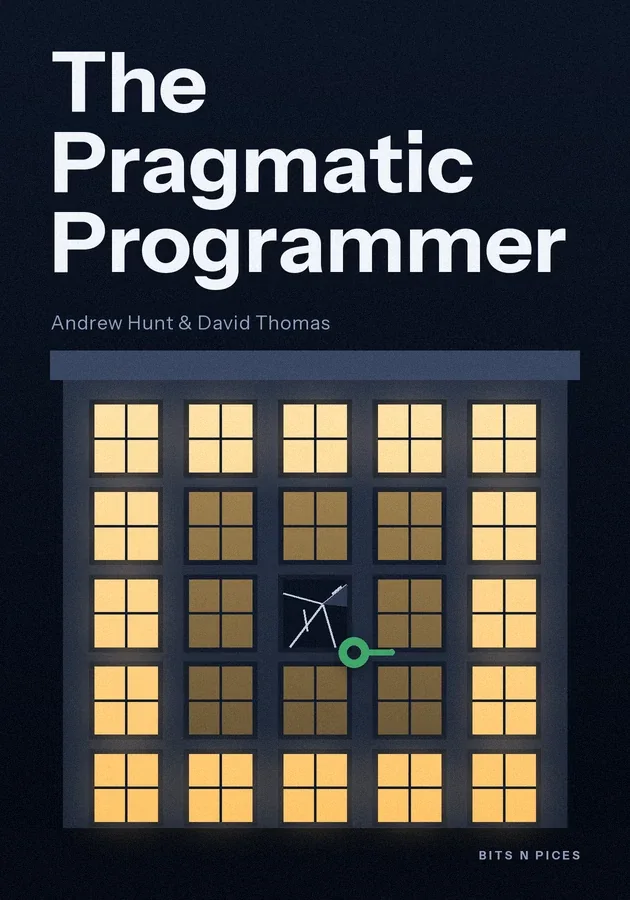
Hunt and Thomas borrow an idea from urban policing. A building with one broken window that stays unrepaired soon has many, because neglect signals that nobody cares.
- Tracer bullets and prototypes
How do you build something when you do not fully understand the problem? The authors offer 2 tools that are often confused.
- Automate, test and own your tools
Pragmatic programmers are lazy in a useful way. Anything you do more than a couple of times, they say, should be scripted: building, testing, deploying, setting up a new machine.
- Put it to work
This week, find one piece of duplicated knowledge in your project, a rule or a value that lives in more than 1 place, and give it a single home. Fix one broken window: a flaky test, a misleading name, a comment that lies.
六种学习方式
为本书专门编写了可视化、思维导图、练习、场景、挑战和复习模式。
语音朗读
聆听此内容,由 Michael 或 Bella 朗读。
测验与抽认卡
测试你的阅读成果,并通过间隔重复巩固记忆。
Bits AI
它可以根据你正在看的书籍、章节或测验题来回答。





