

核心要点
- Keeping small vows through hard moments builds the willpower for large ones
- Confessing a wrong plainly and quickly heals it and changes the other person
- Satyagraha works by accepting suffering without retaliation until injustice is exposed
- Simplicity is freedom: every comfort you drop is one less claim on you
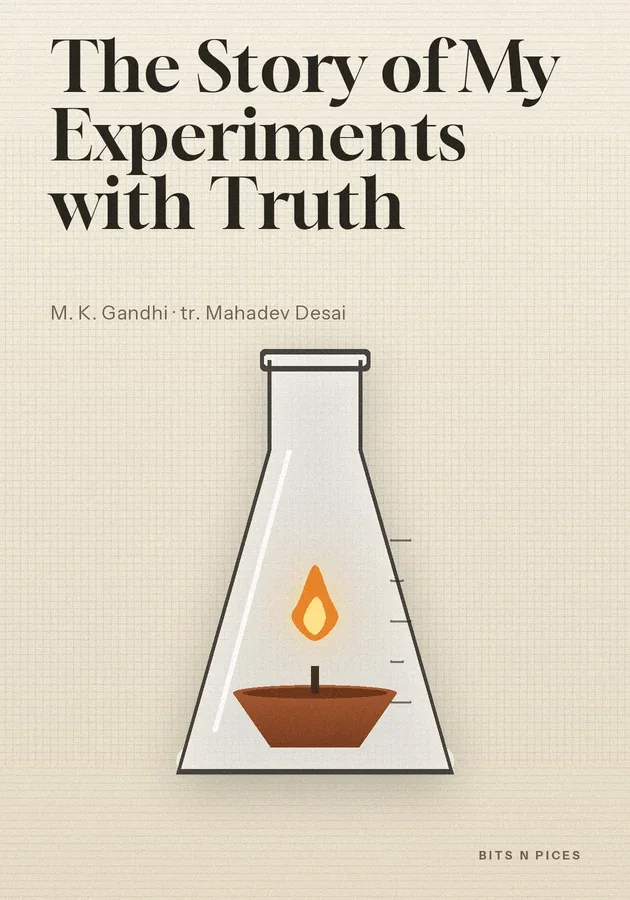
- Treat your own life as a laboratory for testing what is true
本篇内容
- A life lived as an experiment
Most autobiographies polish the hero. Gandhi's does the opposite.
- Small vows build a large character
Before Gandhi left for London, his mother made him promise to avoid meat, wine and women. He kept the vow through loneliness, mockery and hunger, and he later felt that keeping it taught him more than any lecture.
- Confession is a source of strength
As a teenager Gandhi took a bit of gold from his brother's armlet to clear a debt. He could not bear the guilt, so he wrote a confession and handed it to his sick father, expecting anger.
- Satyagraha is born in South Africa
A young lawyer with a first-class ticket is thrown off a train at Pietermaritzburg because of his skin. Gandhi spends a freezing night in the waiting room deciding whether to go home or stay and fight.
- Simplicity as a way of life
Gandhi kept stripping his life down. He cut his own hair, washed his own clothes, cleaned latrines and moved his family into shared communities like Phoenix Settlement and Tolstoy Farm, where everyone worked with their hands.
- Put it to work
Make one small vow this week that you would normally break, such as no phone at dinner, and keep it for 7 days no matter what. Notice how much easier the second week feels.
六种学习方式
为本书专门编写了可视化、思维导图、练习、场景、挑战和复习模式。
语音朗读
聆听此内容,由 Michael 或 Bella 朗读。
测验与抽认卡
测试你的阅读成果,并通过间隔重复巩固记忆。
Bits AI
它可以根据你正在看的书籍、章节或测验题来回答。





