核心要点
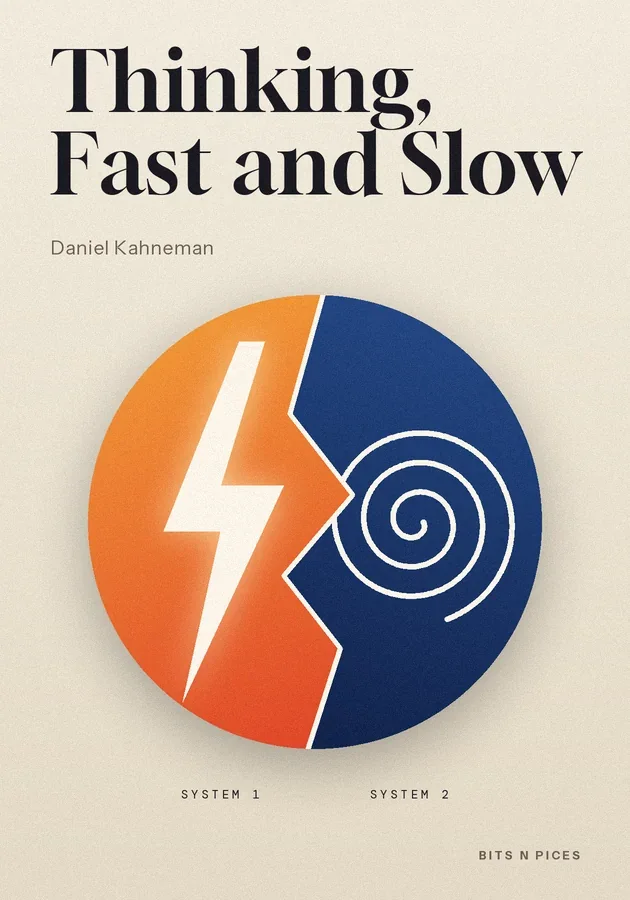
- Two systems run your mind: fast intuition and slow reasoning
- What you see is all there is — we judge from incomplete evidence
- Losses hurt about twice as much as equivalent gains please
- The remembering self, not the experiencing self, makes your decisions
本篇内容
- Two systems
Kahneman describes the mind as two characters. System 1 is fast, automatic, effortless — it reads emotions, completes '2+2', swerves the car.
- Heuristics and biases
When facing a hard question, System 1 quietly substitutes an easier one. 'Is this investment sound?
- Prospect theory
Kahneman's Nobel-winning work with Amos Tversky showed humans don't evaluate outcomes; we evaluate gains and losses from a reference point — and losses loom roughly twice as large as gains. This explains why we hold losing stocks too long, buy insurance and lottery tickets simultaneously, and reject fair bets.
- Two selves
Your experiencing self lives your life; your remembering self writes the story — and the story is ruled by peaks and endings, not duration. A painful procedure that ends gently is remembered as better than a shorter one that ends sharply.
六种学习方式
为本书专门编写了可视化、思维导图、练习、场景、挑战和复习模式。
语音朗读
聆听此内容,由 Michael 或 Bella 朗读。
测验与抽认卡
测试你的阅读成果,并通过间隔重复巩固记忆。
Bits AI
它可以根据你正在看的书籍、章节或测验题来回答。