

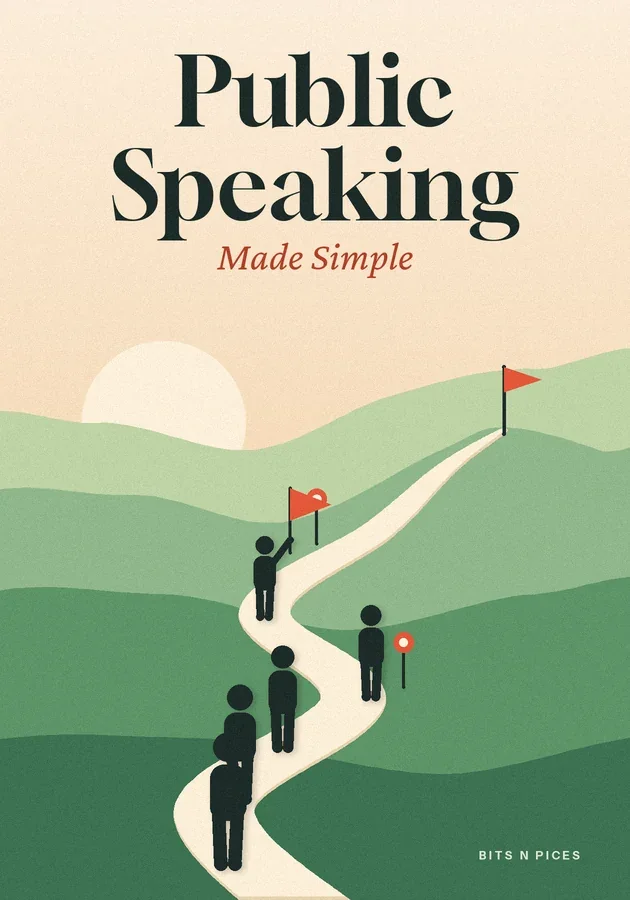
Public Speaking Made Simple
Key takeaways
- Think of a talk as leading a walk: say where you are going, keep a steady pace, stop at the views, and make sure everyone arrives.
- Most of the value comes from four habits: one sentence to remember, a prepared first and last thirty seconds, slower speech with pauses, and three spoken rehearsals.
- When a talk goes wrong, the audience takes its cue from you, so a calm pause and a clear restart matter more than the mistake itself.
- Children copy how you treat nerves and mistakes, so let them hear you rehearse, praise their courage over polish, and never rescue them mid-sentence.
- Impromptu, online and second-language talks need the same basics plus one adjustment each: a simple shape, shorter chunks, or slower and plainer sentences.
Inside this bit
- A talk is a guided walk
If public speaking feels overwhelming, swap the picture in your head. You are not on a stage being judged; you are a guide leading a small group along a path you know.
- Six myths it is safe to drop
Several beliefs make speaking harder than it needs to be. Myth one: good speakers do not get nervous.
- The few habits that carry most talks
Packing for a journey is a useful comparison. Forget your passport, tickets or phone and the trip is in trouble; forget almost anything else and you manage.
- Edge cases: impromptu, online, second language
Three situations catch even practised speakers. The first is impromptu speaking, when you are asked to say a few words with no warning.
- What your children learn by watching
Children learn more about speaking from watching you than from any tip you give them. If they see you pacing the kitchen muttering your talk, they learn that rehearsal is normal.
- When it goes wrong, and how to keep improving
Something will go wrong eventually. A projector dies, your mind goes blank, someone asks a hostile question, or time runs out.
Learn it six ways
Visualize, Mind Map, Practice, Scenario, Challenge and Review are written for this book.
Quiz and flashcards
Test what you read and keep it with spaced repetition.
Bits AI
It answers about the book, the section, the quiz question you are on.





