

The Culture Map
Key takeaways
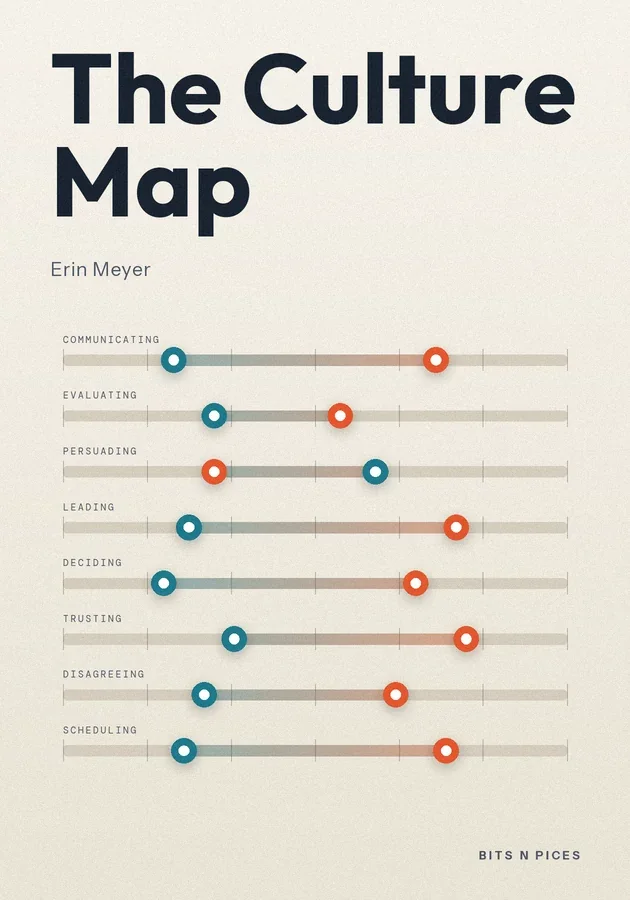
- Cultural differences sit on eight scales, and what matters is relative position
- Low-context cultures say exactly what they mean; high-context cultures read between lines
- How people give negative feedback is separate from how directly they speak
- Trust can be built through competence or through shared meals and time
- Open disagreement is a sign of respect in some cultures and rudeness in others
Inside this bit
- Same words, different meanings
A Dutch manager tells his Indian colleague that the report is not good enough, and is puzzled when the colleague seems wounded rather than grateful for the clarity. An American praises a French team's work before mentioning a problem, and the French hear only the praise.
- Reading the air versus saying it plainly
The first scale is communicating. In low-context cultures like the United States, Australia and the Netherlands, good communication is explicit; you say what you mean, repeat it, and follow up in writing.
- Feedback, persuasion and the boss
Being direct in conversation and being direct with criticism are different scales, and the combinations surprise people. The French speak indirectly yet criticise bluntly; Americans speak plainly yet wrap negative feedback in three compliments.
- How trust and disagreement work
Meyer separates two kinds of trust. Cognitive trust is built through reliability and competence: you deliver, so I trust you.
- Whose clock are we on
The final scales are deciding and scheduling. In consensual cultures like Japan, Sweden or Germany, decisions take long to make because everyone is consulted, but once made they are fixed.
- Put it to work
This week, pick one colleague or client from another culture and place both of you on Meyer's eight scales; the gaps you find are the places where friction is likely. Before your next feedback conversation with them, decide consciously how direct to be and whether to deliver it publicly or privately.
Learn it six ways
Visualize, Mind Map, Practice, Scenario, Challenge and Review are written for this book.
Narrated
Listen to this bit, read by Michael or Bella.
Quiz and flashcards
Test what you read and keep it with spaced repetition.
Bits AI
It answers about the book, the section, the quiz question you are on.





