

핵심 요약
- Stress is your body mobilising to meet a demand; the trouble starts when that mobilisation keeps running without enough recovery afterwards.
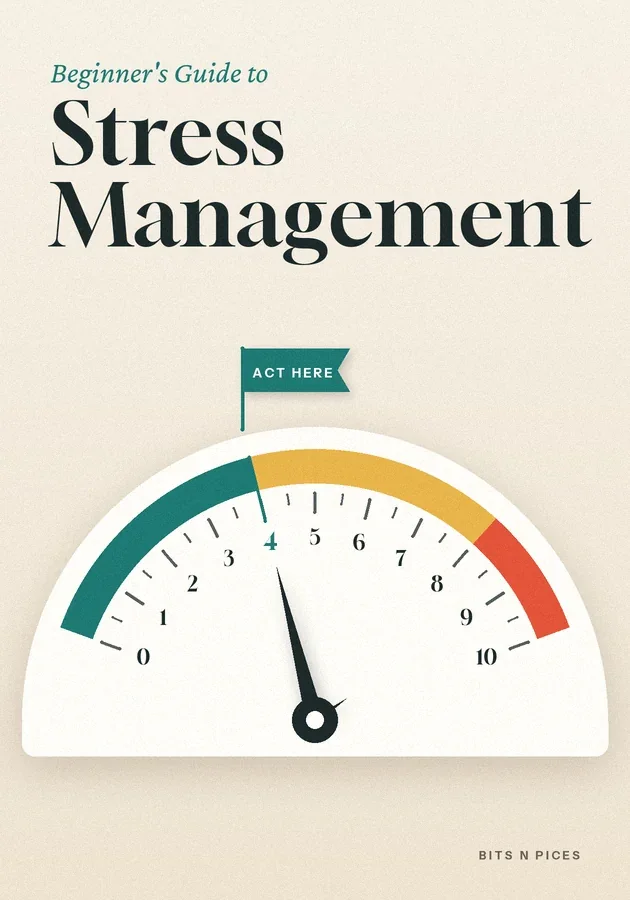
- Learn your personal stress signature, the body, thought and behaviour signals that show up first, so you can act at four out of ten, not nine.
- Sort every worry into what you control, what you can influence and what you cannot change, then spend your effort on the first two.
- When a problem can be changed, solve it; when it cannot, soothe your body and attention, because using the wrong tool keeps stress going.
- Ask for specific help early, and see a doctor or counsellor when stress stays heavy for weeks or starts affecting sleep, work or relationships.
이 비트의 내용
- What stress actually is
Stress is the name we give to your body and mind gearing up to meet a demand. The demand is called a stressor: a deadline, an argument, a noisy flat, a bill that arrived early.
- The vocabulary that makes stress workable
A few terms turn a vague feeling into something you can work with. A stressor is the event or condition that makes a demand on you.
- Reading your own early signals
Everyone has a stress signature, a personal set of signals that appear before things get serious. Some show up in the body: a tight jaw, shallow breathing, a knot in the stomach, a headache by late afternoon.
- Your first three moves
Once you can spot stress rising, three moves cover most everyday situations. The first is to sort.
- Beginner mistakes that keep stress going
The first classic mistake is using the wrong tool. If your stress comes from a problem you could fix, such as an unanswered message from your landlord, breathing exercises only postpone it.
- Talking about it and knowing when to get help
Stress shrinks when it is shared well. Vague complaints such as 'everything is too much' leave people unsure how to help.
여섯 가지 방법으로 배우기
이 책을 위해 시각화, 마인드맵, 연습, 시나리오, 챌린지, 복습 기능이 준비되어 있어요.
퀴즈와 플래시카드
읽은 내용을 테스트하고 간격 반복으로 확실히 기억하세요.
Bits AI
보고 있는 책, 섹션, 퀴즈 질문에 대해 답변해 줍니다.





