

핵심 요약
- A budget is simply deciding where your money goes before the week decides for you, and a pen and paper are enough to start.
- Three numbers do most of the work: what comes in, what must go out, and what is left for everything else.
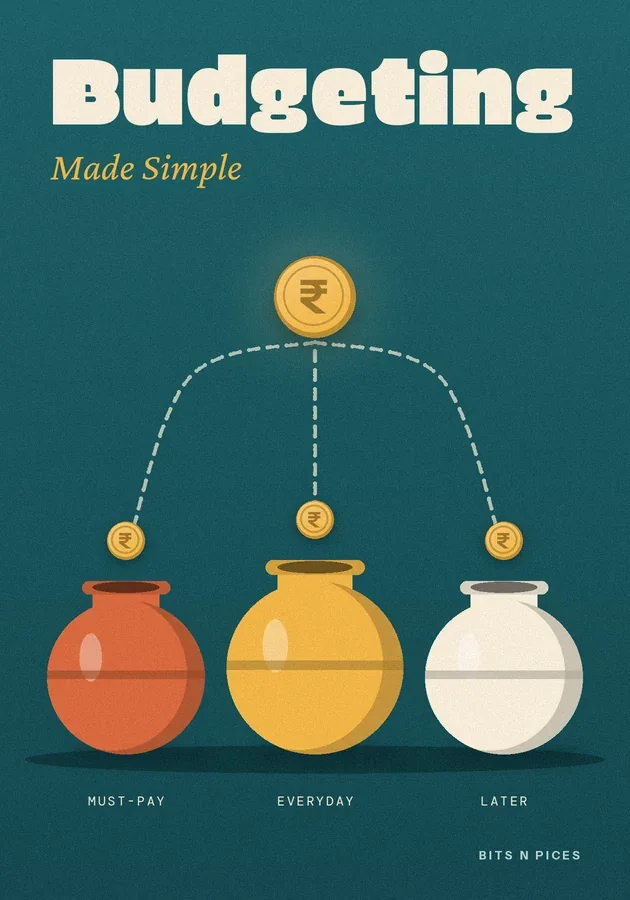
- Split each payday into three pots, must-pay, everyday and later, and stop everyday spending when that week's share is empty.
- Swap 'we can't afford it' for 'that isn't in our plan this week', so children hear about choices rather than worry.
- Start a small safety pot, even a little each week, and ask for free help early if debts begin to feel heavy.
이 비트의 내용
- A budget is just a plan for your money
If the word budget makes your shoulders tense, think of it as packing a school bag the night before. You look at what tomorrow needs, put each thing in its place, and the morning goes more smoothly.
- Four myths that keep busy parents stuck
The first myth is that budgets are for people with spare money. The opposite is true: the tighter money is, the more a plan helps, because every amount has to do a job.
- The three numbers that do most of the work
You could track fifty things, but three numbers give you most of the picture. The first is what comes in each month after deductions.
- Three pots for the whole family
Once you know your three numbers, give your money three homes. The must-pay pot holds rent, bills, school costs and loan payments, set aside on payday so it cannot be touched.
- Talking about money with your children
Children learn about money mostly by watching. They see you check a list before shopping, drop a coin in a jar or wait for something you want.
- Small safety nets and when to ask for help
A safety pot is a little money kept aside for surprises: a cracked phone screen, a school trip announced at short notice, a visit to the doctor. It does not need to be large to help.
여섯 가지 방법으로 배우기
이 책을 위해 시각화, 마인드맵, 연습, 시나리오, 챌린지, 복습 기능이 준비되어 있어요.
퀴즈와 플래시카드
읽은 내용을 테스트하고 간격 반복으로 확실히 기억하세요.
Bits AI
보고 있는 책, 섹션, 퀴즈 질문에 대해 답변해 줍니다.





