

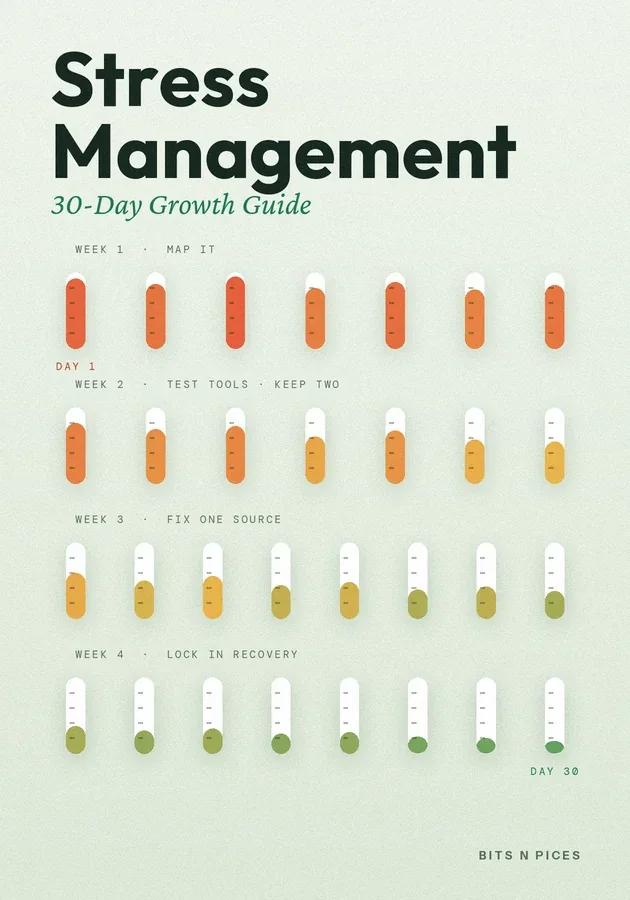
핵심 요약
- Measure before you change anything: a two-minute daily log for one week shows which triggers and times drive most of your stress.
- Test calming tools like experiments, rating your stress before and after each one, and keep only the two that clearly work for you.
- Separate settling from numbing, because scrolling or an extra coffee can feel like relief tonight while quietly raising tomorrow's stress.
- In week three, change one source of stress, such as a late-evening email habit, instead of only soothing its effects.
- When a week slips, shrink the daily action and repeat that week; never missing twice matters more than a perfect streak.
이 비트의 내용
- How the thirty days are built
Thirty days is long enough to see patterns and short enough to commit to. This programme runs in four weekly themes, each with a daily micro-action of five to fifteen minutes.
- Week one: map your stress before changing it
The temptation is to start fixing on day one. Resist it for a week.
- Week two: test your downshift tools
Week two is about lowering stress in the moment, and the attitude is scientific. Each day, when a stress moment arrives, try one tool and rate your stress before and after.
- Week three: reduce the load at its source
Calming tools treat the effects of stress. Week three goes after causes.
- Week four: lock in recovery and support
The final week makes the gains last. Recovery is whatever refills you after demanding days, and the programme asks you to protect four basics: a steady sleep and wake time, some daily movement, one thing each week you do purely for enjoyment, and regular contact with people who leave you feeling better.
- When a week slips, and your day-thirty review
Almost every programme has a week that goes wrong: illness, a deadline, a family visit. Treat it as data, not failure.
여섯 가지 방법으로 배우기
이 책을 위해 시각화, 마인드맵, 연습, 시나리오, 챌린지, 복습 기능이 준비되어 있어요.
퀴즈와 플래시카드
읽은 내용을 테스트하고 간격 반복으로 확실히 기억하세요.
Bits AI
보고 있는 책, 섹션, 퀴즈 질문에 대해 답변해 줍니다.





