

핵심 요약
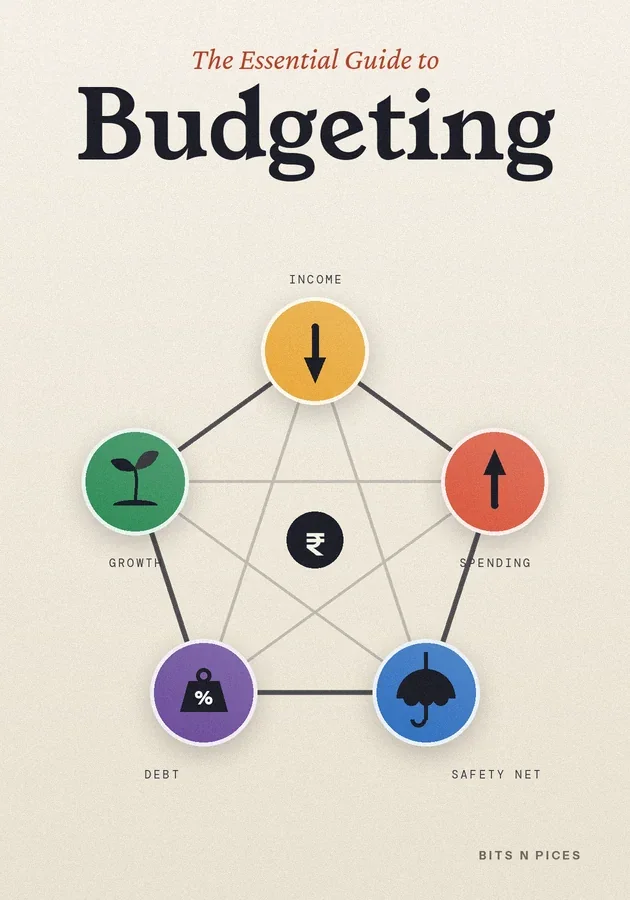
- Budgeting rests on five connected ideas, income, spending, a safety net, debt and growth, and a change in one affects all the others.
- Cash flow is simply money in minus money out over a month, and a positive figure is the fuel for every other goal.
- Choose a budgeting method that fits your life: a simple rule for a quick start, or a detailed plan when you want more control.
- Build a safety net before chasing growth, because an emergency fund stops one bad month from turning into lasting debt.
- Interest works in both directions: expensive debt grows against you and patient saving grows for you, so clear costly debt early.
이 비트의 내용
- Five big ideas and how they connect
Budgeting can look like a hundred separate tips, but nearly all of them belong to five big ideas. Income is the money that comes in.
- Income and cash flow: where everything starts
Your income is every amount that arrives: salary, tips, freelance payments, rent from a spare room, support from family. For budgeting, the figure that counts is net income, the money that reaches you after tax and other deductions.
- Needs, wants and choosing a method
Once you know your cash flow, you decide how to divide it. The first split is needs against wants.
- The safety net: buffer, emergency fund, insurance
The safety net is the part of a budget that does nothing on a normal day and everything on a bad one. It has three layers.
- Debt and growth: interest works both ways
Interest is the price of using money over time. When you borrow, you pay interest on the principal, the amount borrowed.
- What to prioritise, and what to ignore
With the whole map in view, a sensible order appears. First, cover your needs and the minimum payment on every debt, because missed payments bring fees and damage that are hard to undo.
여섯 가지 방법으로 배우기
이 책을 위해 시각화, 마인드맵, 연습, 시나리오, 챌린지, 복습 기능이 준비되어 있어요.
퀴즈와 플래시카드
읽은 내용을 테스트하고 간격 반복으로 확실히 기억하세요.
Bits AI
보고 있는 책, 섹션, 퀴즈 질문에 대해 답변해 줍니다.





