

핵심 요약
- Saving and investing work as a stack of cash flow, buffers, debt, protection, growth and behaviour, and the wrong order breaks even sound choices.
- In the early years your savings rate matters more than your returns, so automate saving on payday and send half of every raise to it.
- Paying off a debt earns its interest rate with no risk, which makes clearing costly debt one of the best returns available to anyone.
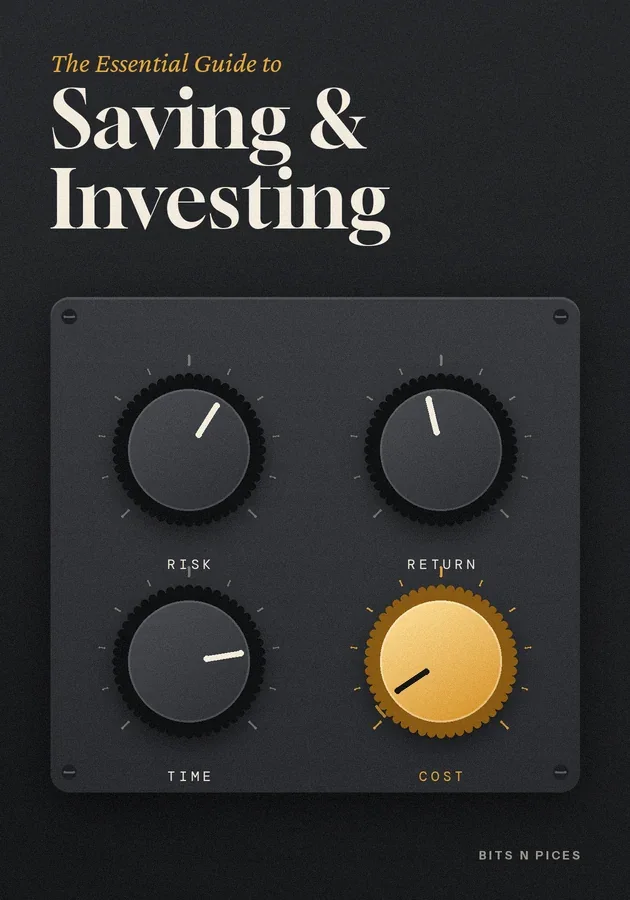
- Investing turns on four dials, risk, return, time and cost, and cost is the only one you fully control while it quietly compounds against you.
- Ignore forecasts, tips and daily prices; a written priority order and a yearly rebalance protect you from your own worst moments.
이 비트의 내용
- Six ideas and the order they work in
Most money advice arrives as loose tips: cut this, buy that, avoid the other. The essential picture is smaller and tidier.
- Cash flow is the engine, not the budget
Your savings rate, the share of income you keep, matters more in the early years than any return you could earn. A person investing a small amount brilliantly grows more slowly than one keeping a large share of income in a plain account, simply because the second has more fuel.
- Buffers and protection before growth
An emergency fund is not an investment; it is what lets your investments stay invested. A common guideline is three to six months of essential spending, held somewhere safe and quick to reach, with the upper end for single earners, uneven incomes and people with dependants.
- Debt is investing in reverse
Every loan has a rate, and paying it off earns exactly that rate, with certainty and without market risk. Clearing a credit card that charges, say, 36 per cent a year is in effect a 36 per cent return that no honest investment will promise you.
- Four dials: risk, return, time, cost
Every investing decision turns on four dials. Risk and return are linked: shares can grow faster but also fall harder, while deposits and high-quality bonds move gently and grow slowly.
- What to prioritise and what to ignore
Put the pieces in order and a sequence appears: a starter buffer, then costly debt cleared, then a full buffer and protection, then steady long-term investing, then fine-tuning. Most of the gains come from the first four steps, done early and left running.
여섯 가지 방법으로 배우기
이 책을 위해 시각화, 마인드맵, 연습, 시나리오, 챌린지, 복습 기능이 준비되어 있어요.
퀴즈와 플래시카드
읽은 내용을 테스트하고 간격 반복으로 확실히 기억하세요.
Bits AI
보고 있는 책, 섹션, 퀴즈 질문에 대해 답변해 줍니다.





