

핵심 요약
- 동기, 능력, 자극이 동시에 맞물릴 때 행동이 일어납니다
- 최악의 날에도 할 수 있을 만큼 습관을 아주 작게 만드세요
- 매일 이미 하고 있는 행동 바로 뒤에 새 습관을 연결하세요
- 즉시 자축하세요. 긍정적인 감정이 습관을 뇌에 각인시킵니다
- 의지나 동기에 기대지 말고 환경을 설계하세요
이 비트의 내용
- 작게 시작하면 변화가 쉬워집니다
BJ Fogg, a Stanford behaviour scientist, once decided to do 2 push-ups every time he went to the bathroom. It sounds silly, but within months he was doing dozens a day without effort.
- 행동을 만드는 공식
Fogg's central model says a behaviour happens when 3 things line up at the same moment: motivation, ability and a prompt. He writes it as B equals MAP.
- 쉬워질 때까지 작게 쪼개기
Fogg suggests two ways to make any behaviour tiny. Either take a starter step, like putting on your running shoes rather than running, or scale down the whole thing, like flossing 1 tooth instead of all of them.
- 기존 습관에 연결하기
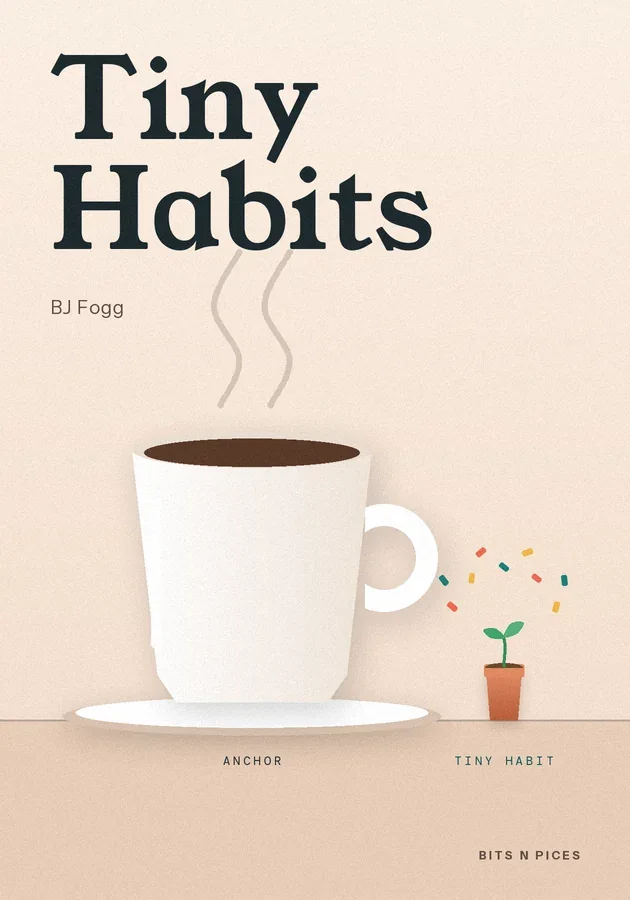
A new habit needs a reliable prompt, and Fogg says the best prompt is a behaviour already in your life. He calls this an anchor.
- 성취감을 느끼며 뇌에 각인하기
This is the part most habit advice misses. Fogg argues that habits form through emotion, not repetition alone.
- 직접 적용해 보기
This week, choose one habit you want and shrink it until it takes under 30 seconds, like 1 push-up or writing 1 sentence. Find an anchor by listing 5 things you already do every day and picking the one that happens in the right place and at the right time.
여섯 가지 방법으로 배우기
이 책을 위해 시각화, 마인드맵, 연습, 시나리오, 챌린지, 복습 기능이 준비되어 있어요.
내레이션 제공
Michael이나 Bella가 읽어주는 이 비트를 들어보세요.
퀴즈와 플래시카드
읽은 내용을 테스트하고 간격 반복으로 확실히 기억하세요.
Bits AI
보고 있는 책, 섹션, 퀴즈 질문에 대해 답변해 줍니다.





